

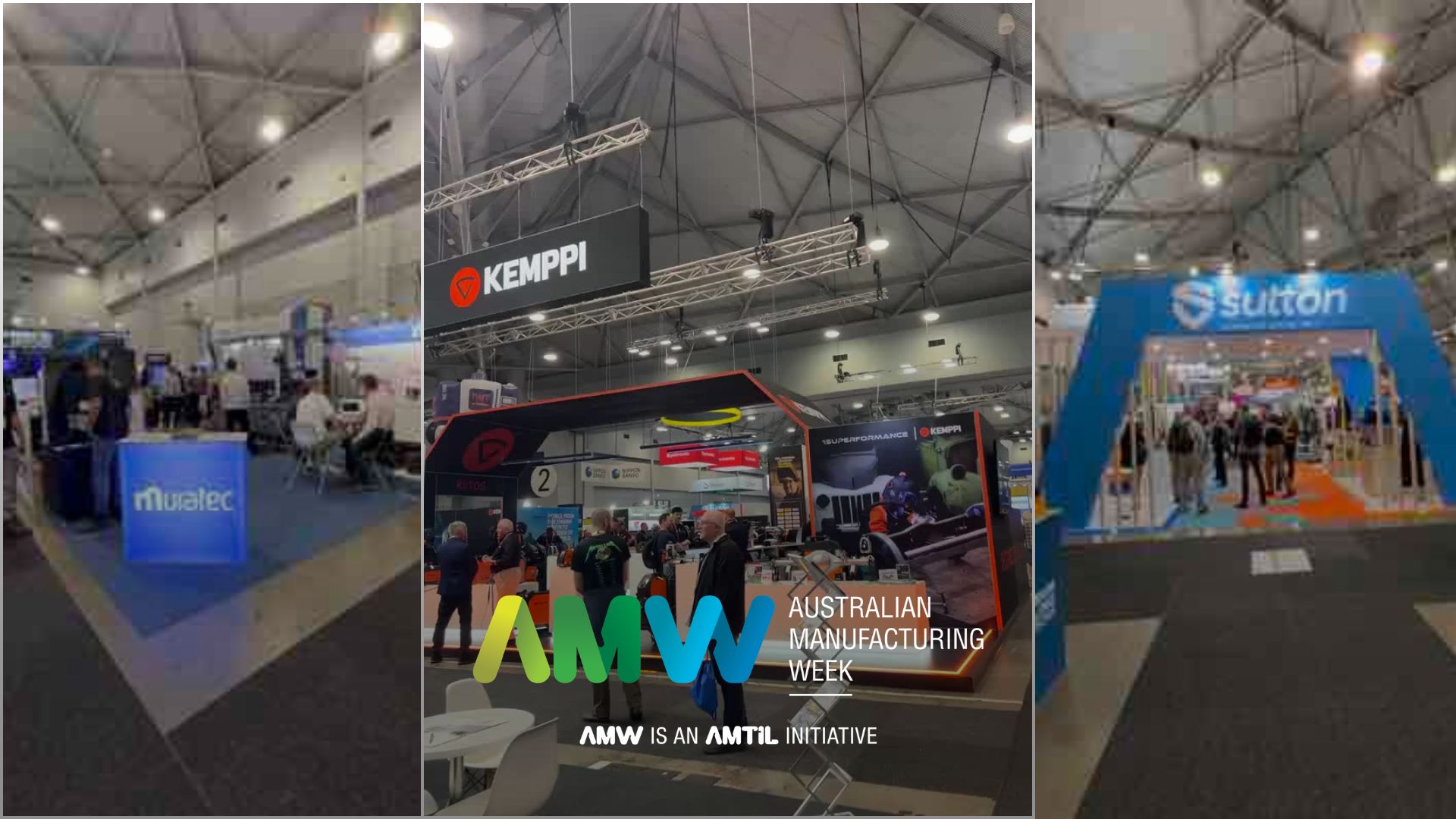

Today, we attended Australian Manufacturing Week in Brisbane. Events like this are not just about looking at machinery and equipment — they’re an opportunity to better understand where Australia’s manufacturing sector really stands today.
For a long time, many people have assumed that Australia no longer has a meaningful manufacturing industry, or have casually labelled it an “industrial desert.” But after walking the exhibition floor, we believe that view oversimplifies the reality.
Australia still has manufacturing — it simply looks very different from the large-scale production model many of us associate with China.
What stood out at the event was the strong focus on CNC machining, laser cutting, automation, robotics, welding systems, testing equipment, and industrial software. The industry here is not competing on low costs or massive production volume. Instead, it competes through engineering capability, quality control, reliable delivery, and long-term customer relationships.
In sectors such as mining, infrastructure, defence, and clean energy, there remains genuine demand for local manufacturing and advanced engineering services.
Another clear trend was the growing presence of Chinese and broader Asian industrial equipment suppliers entering the Australian market more deeply. In the past, when people talked about “Chinese manufacturing going global,” they often referred to consumer products, e-commerce, or everyday goods. Today, however, more industrial machinery, laser systems, automation equipment, and smart manufacturing solutions are making their way into Australia.
Traditionally, China’s strengths have been cost competitiveness and speed — and those advantages still matter. But in the Australian market, price and efficiency alone are rarely enough. To build long-term partnerships, success depends far more on local support, installation, training, maintenance, spare parts availability, and ultimately, trust built over time.
For many Chinese-background investors and entrepreneurs, opportunities in Australia may extend far beyond hospitality, retail, and service industries. Traditional manufacturing, engineering services, and industrial upgrading are all areas worth paying serious attention to.
The combination of “Chinese manufacturing + Australian local application” is, in many ways, a very interesting space.
More importantly, success requires understanding where a business sits within its industry — its customer base, operational capabilities, technical expertise, equipment foundation, team strength, and local brand trust.
Many Australian businesses hold significant underlying value that is not always fully recognised. They may already have customers, industry experience, and strong local trust, but face challenges such as succession planning, limited growth capital, or weak connections to Asian supply chains.
On the other hand, for Chinese and Asian companies, entering Australia is not as simple as shipping products into the market. The real challenge lies in building local channels, providing on-the-ground service, meeting compliance requirements, earning customer trust, and finding the right local partners.
Much of our work happens precisely at this intersection — understanding the real value of Australian businesses while also recognising what Asian capital, equipment, supply chains, and industrial resources can bring to the table. The key is identifying where both sides can complement each other and how those partnerships can be implemented step by step.
Some opportunities may eventually become acquisitions or business sales. Others may take the form of distribution partnerships, joint ventures, investments, channel building, or localisation strategies. The structure may differ, but the core idea remains the same: connecting Australia’s local customers, applications, and trusted market presence with Asia’s manufacturing capability, capital, supply chains, and operational efficiency.
One of the biggest impressions from this exhibition is that Australia is not lacking in opportunities. Many of the most valuable ones simply aren’t found in the most crowded or attention-grabbing spaces — they exist deeper within traditional industries, engineering expertise, long-term customer relationships, and industrial transformation.

