
Transaction Overview
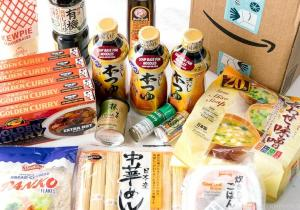
In August 2023, we successfully completed the sale of an Asian food wholesale business.
The company specialised in importing and wholesaling Asian food products, supplying local supermarkets and restaurant customers. While the business itself was well established, the transaction involved multiple layers of complexity at the execution level—including data clarification, lease compliance, financing arrangements, and adjustments to the deal structure.
Before working with us, the seller had engaged two local business brokers. Despite a prolonged period on the market, neither engagement led to meaningful progress.
After formally appointing our team, the entire transaction was completed smoothly within approximately five months.
Rebuilding trust was the prerequisite for moving the deal forward
From the very first phone call, it was clear that the seller was cautious and reserved toward brokers. This hesitation stemmed from disappointment accumulated through previous experiences.
Rather than rushing into an agency agreement, we focused our initial discussions on the business itself—its product mix, supply chain, customer base, and key day-to-day operational drivers. Through these conversations, the seller gradually realised that our understanding went beyond surface-level documents.
The day after the initial call, we visited the site in person. After the agency agreement was signed, we continued to invest significant time in face-to-face discussions, repeatedly reviewing financials and operational details together. During this process, the seller openly shared his past experiences with other brokers and came to a clear conclusion: choosing a larger firm alone does not solve the problem. What matters is whether someone is genuinely willing to invest time and truly understand the business.
As discussions deepened, the seller could clearly see the level of effort we were putting into understanding the business—not just verifying numbers, but continuously discussing operating logic, risk points, and what buyers would really focus on. Trust was built naturally through this sustained and concrete engagement.
In our view, a broker’s role is not simply to organise materials and promote a listing.
Without deep, ongoing communication with the seller, it is extremely difficult to successfully sell an operating business.
This is especially true for businesses built around Asian products and supply chains. Our familiarity with product backgrounds, industry practices, and communication styles allowed discussions to move more efficiently and helped establish trust early in the process.
Using data analysis to help buyers truly understand the business
Before taking the business to market, we carried out a structured data analysis so that both buyers and seller were working from the same, accurate understanding of the business.
Supply side: We mapped out key suppliers, countries of origin, purchasing volumes, and payment terms, allowing buyers to assess supply chain concentration and potential risks.
Sales side: We analysed customer composition, including the number of supermarket and restaurant clients, revenue contribution, customer concentration, and payment cycles and credit behaviour across different customer types.
Product mix: Products were categorised to show each category’s share of total revenue, helping buyers assess reliance on any single product or category.
Cash flow: We reviewed inventory levels, purchasing cycles, and turnover, and analysed cash flow performance by linking supplier payment terms with customer collection cycles.
This allowed buyers to assess early on:
whether profit drivers were clear
whether customers or suppliers were overly concentrated
whether the cash flow structure could support ongoing operations
High-intensity involvement and an orderly process created controllable outcomes
During the market phase, we did not take an open, high-volume listing approach. Instead, we chose a process that was more considerate to the seller but demanded significantly more effort from the broker.
To minimise disruption to daily operations, all site inspections were scheduled after business hours or on weekends. The business was located in Liverpool, nearly an hour’s drive each way. Each inspection required several hours on site, but this approach effectively avoided employees, customers, and suppliers becoming aware of the sale prematurely.
At the same time, we held in-depth one-on-one discussions with potential buyers rather than simply sending information packs. Only buyers who met clear standards in business understanding, financial capability, and execution intent were allowed to progress.
Information disclosure followed a staged process. In the early phase, buyers only received high-level information on the industry, scale, and business structure, without access to the seller’s identity. Only after the business logic, risks, and deal conditions were fully discussed—and with the seller’s explicit consent—were the seller’s details disclosed and further meetings arranged.
This process protected confidentiality and reduced operational disruption, while requiring substantial time investment from us in screening, communication, and coordination. Ultimately, the project generated three formal offers, and contracts were issued to two buyers.
Managing lease and landlord risks to ensure deal execution
As the transaction progressed, we identified a critical risk: lease compliance and landlord acceptance of the incoming buyer.
Due diligence revealed that the property lease was not formalised in a complete and standardised manner, directly affecting buyer financing approval and deal executability.
With the seller fully informed, we assisted in discussions with the landlord to clarify lease terms, renewal rights, and assignment arrangements, and worked toward formalising these terms under a proper lease agreement.
We also arranged meetings between potential buyers and the landlord, allowing the landlord to assess the buyers’ financial strength, industry experience, and long-term operating plans. This alignment significantly reduced uncertainty at later stages of the transaction.
Deep involvement in financing and deal structure to address inventory funding pressure
In this transaction, the buyer relied on commercial lending to complete the purchase. The financing institution placed high requirements on business structure, cash flow, and inventory.
We facilitated direct communication between buyer, seller, and finance representatives, and helped prepare materials so lenders could clearly understand the business logic.
Given the large inventory balance, and with the seller’s knowledge and consent, we assisted both parties in structuring a staged payment arrangement for part of the inventory. This allowed the deal structure to balance the seller’s interests with the buyer’s financing constraints and cash flow capacity.
Through ongoing coordination, financing was successfully approved and the transaction completed as planned.
Closing Thoughts
This Asian food wholesale business was completed within approximately five months not because the market was “easy,” but because complex issues were systematically identified, managed, and resolved one by one.
For us, this case once again confirms a core reality:
In food wholesale and distribution businesses, what ultimately determines the outcome is not the number of enquiries—but execution capability.